
China made headlines worldwide with the launch of its futuristic Transit Elevated Bus (TEB) in the city of Qinhuangdao, Hebei province. This innovative transportation solution, often referred to as the "straddling bus," was designed to alleviate traffic congestion and reduce urban pollution, showcasing China's commitment to pioneering sustainable urban transit solutions.
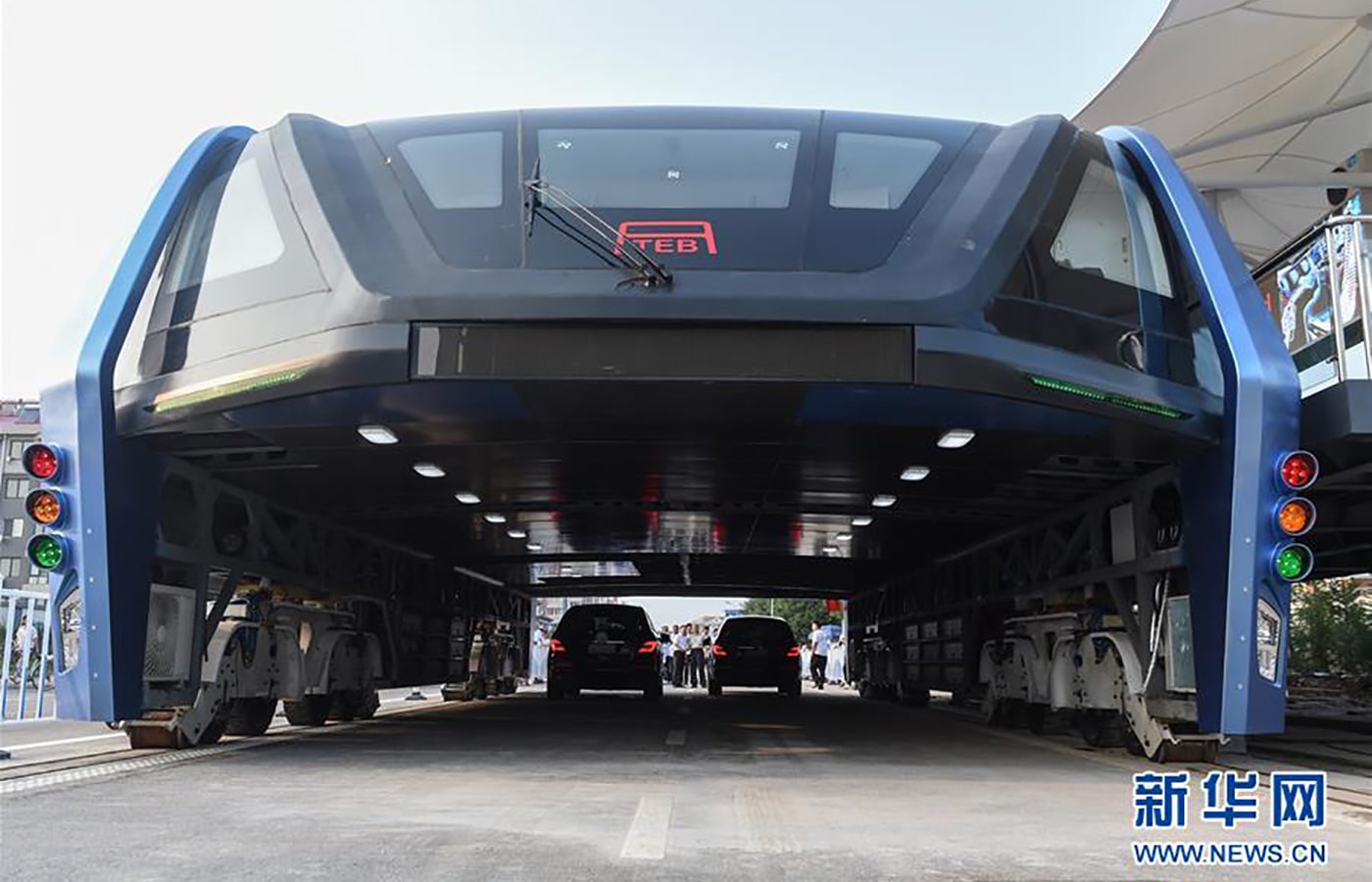 The Chinese TEB Elevated large Straddling Bus idea which let cars drive under it came out six years ago. The bus which launched its service this week in China is designed to handle 300 passengers, and it comes in at 22 meters long, 7.8 meters wide (covering two lanes) plus 4.8 meters tall. The TEB runs on 16 tyres and can attain a speed of 50km/h.
Design and Functionality
The TEB is an elevated bus that runs on tracks embedded in the road, with a passenger compartment that spans the width of two traffic lanes. This design allows the bus to straddle the roadway, enabling cars to pass underneath it. The bus can carry up to 300 passengers in its initial prototype, with plans for future models to accommodate up to 1,200 passengers.
- Dimensions: The prototype stands 4.8 meters high, 7.8 meters wide, and 22 meters long.
- Speed: It can travel at a maximum speed of 60 km/h.
- Capacity: The initial model can transport around 300 passengers.
Benefits and Objectives
The primary objectives of the TEB project are to reduce traffic congestion and lower urban pollution levels. By allowing cars to pass beneath it, the TEB minimizes road space usage, thus potentially reducing traffic jams. Additionally, its electric propulsion system aims to decrease emissions compared to conventional buses and cars.
- Traffic Alleviation: The elevated design bypasses road traffic, theoretically reducing congestion on busy urban streets.
- Environmental Impact: Operating on electricity, the TEB is expected to contribute to lower emissions, supporting China's environmental goals.
Testing and Public Reaction
The TEB underwent its first road test in Qinhuangdao in August 2016, covering a controlled 300-meter track. The test was successful, demonstrating the feasibility of the design and sparking considerable public interest and media coverage.
- Public Interest: The concept received global attention, praised for its ingenuity and potential impact on urban transportation.
- Challenges: Despite the enthusiasm, several technical and logistical challenges were identified, including integration with existing traffic systems, safety concerns, and funding for full-scale deployment.
The invention of the Transit Elevated Bus is considered a revolution for environment-friendly public transportation and is a breakthrough in advanced manufacturing technologies.
Lower cost and shorter construction period
The average fuel consumption of each bus is 21.6t per year, and the estimated carbon emission is 66t. One TEB has the capacity of 40 buses, but with much lower emission - reducing 864t of fuel consumption and 2640t of carbon emission
No more traffic jams
TEB occupies two lanes and consists of two layers. The upper layer will be utilized for carrying passengers and the lower layer is hollowed. Vehicles under 2 meters can go underneath, whether TEB is moving or stopped. The speed of TEB could reach to 60 km/h, and the average speed is 40 km/h. A TEB could carry 1200-1400 passengers.
Powered by electricity
Transit Elevated Bus (TEB) is a low-carbon urban transportation technology. It is completely powered by municipal electricity and solar energy systems. In terms of electricity, the setting is called relay direct current electrification.
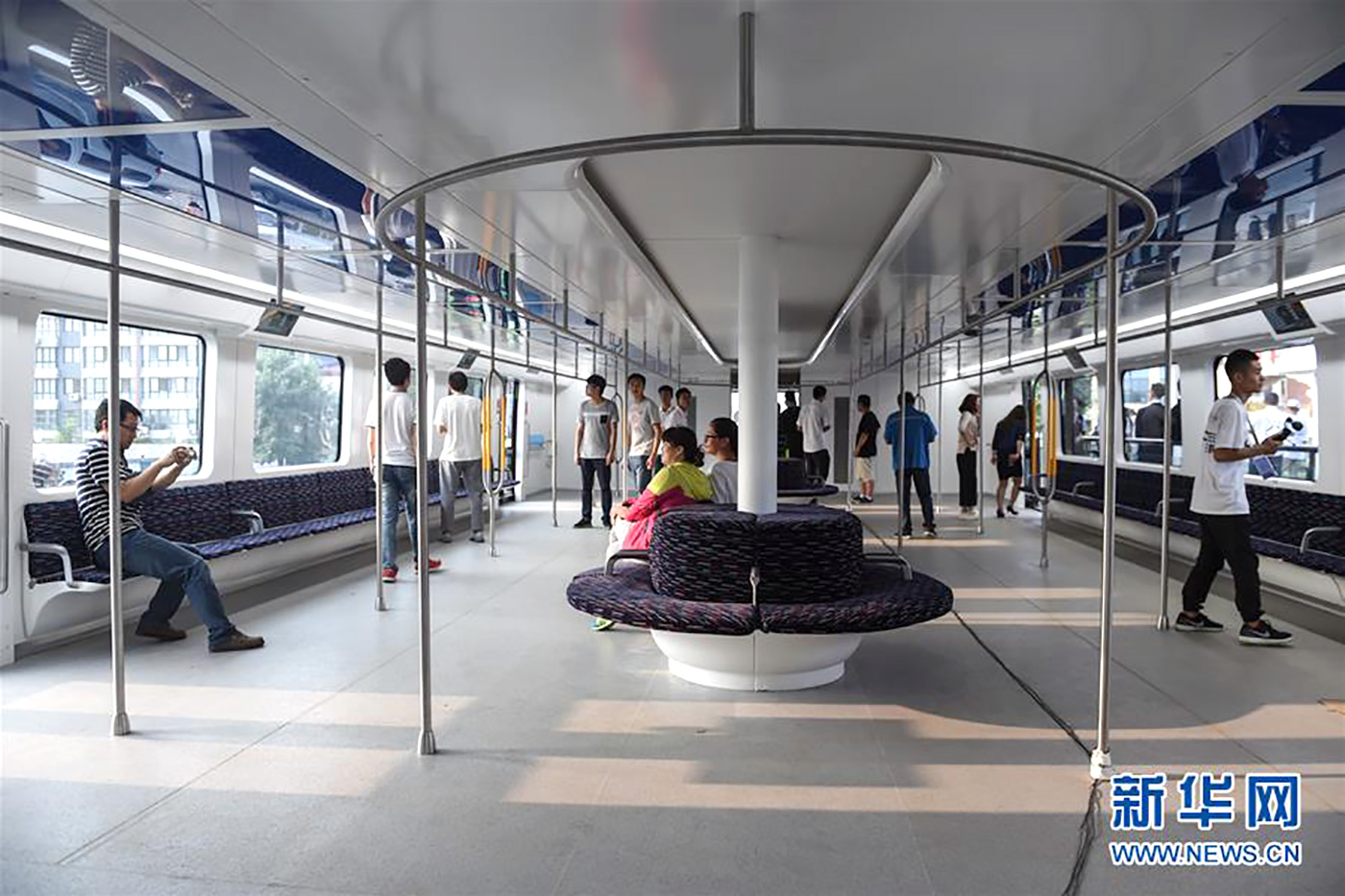
With that height, the only vehicles that can overtake the TEB are small cars.
Current Status and Future Prospects
Since the initial test, the TEB project has faced various hurdles. Reports indicate issues related to funding, technical challenges, and regulatory approvals. As of now, the project has not progressed to widespread implementation, and the prototype remains a subject of interest rather than a fully operational system.
- Technical and Financial Hurdles: The project requires significant investment and technical refinement before it can be deployed on a large scale.
- Future Development: While the TEB project has slowed, it remains a symbol of innovative thinking in urban transportation. Continued interest and potential future investments could see the concept evolve and possibly overcome current challenges.
0 comments:
Post a Comment
Please tell us what you fill about this post